Borrowed Gravity
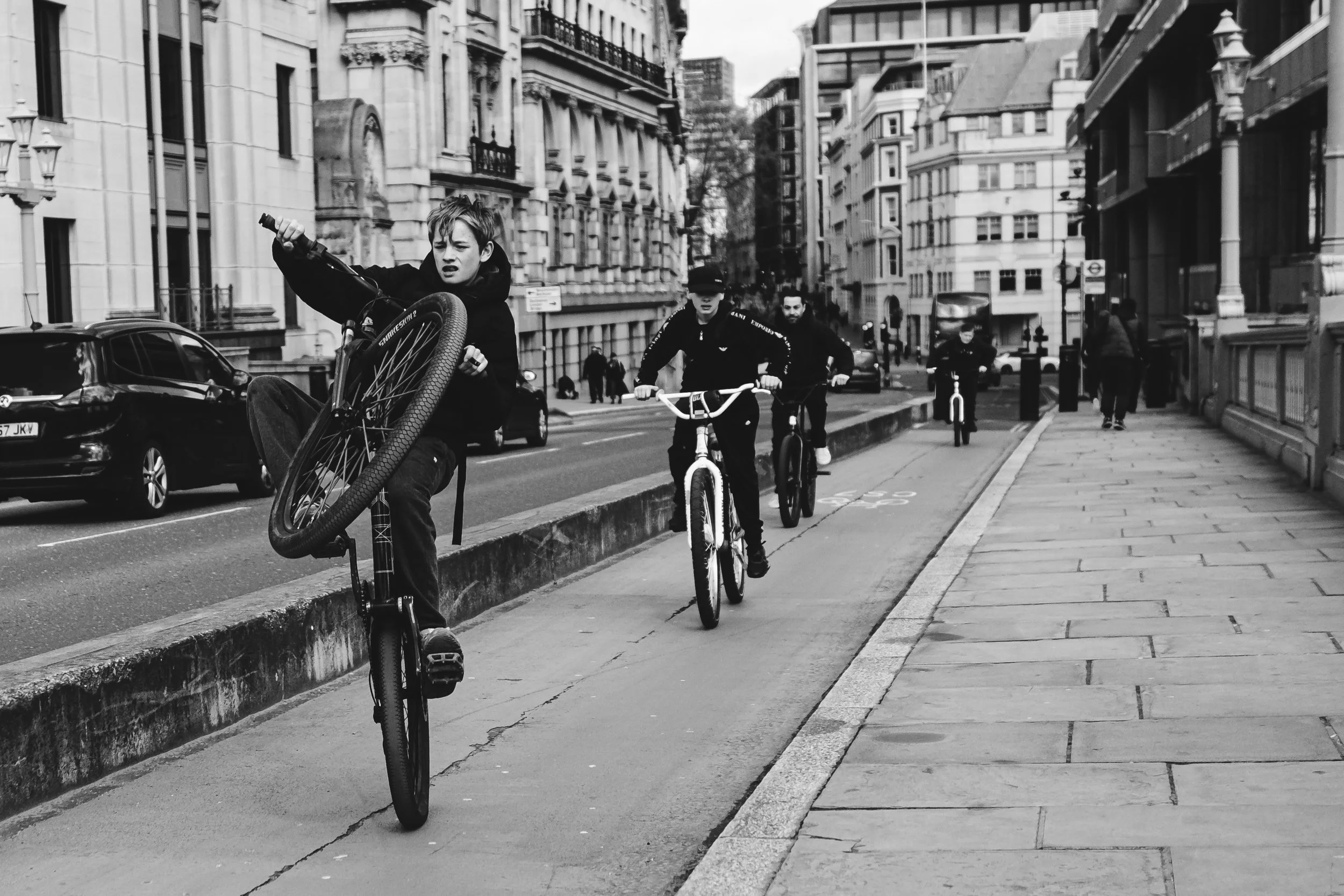
You can tell when a street has been claimed, even temporarily. Not by a sign or a police cordon, just by the way a teenager lifts his front wheel like the road belongs to him personally and everyone else is just passing through on sufferance.
He’s right in that awkward sweet spot of concentration and performance, face doing the proper grimace of someone trying not to die while also making it look effortless. That look is universal. It’s the same expression you see on people carrying three pints back from the bar or pretending they know what they’re doing with flat-pack furniture. Determination, mild panic, and a hint of “if this goes wrong I’m blaming the world”.
What I like is the little procession behind him. Not quite a gang, not quite a parade, more like a moving peer review panel. They’re following along with that casual confidence of people who know the rules are flexible if you’re quick enough. You get the sense this isn’t a one-off. This is a routine. A regular bit of theatre. London gives you a cycle lane, a strip of tarmac, and the occasional polite painted symbol, and they respond by turning it into a stage and ignoring the concept of “shared space” in the way only the young can manage without guilt.
The city around them looks properly grown-up, all stone and windows and serious architecture, like it’s been holding meetings since before anyone invented fun. It’s doing that London thing where it tries to look important even when nothing important is happening. Then these kids come through and make it briefly ridiculous, which is honestly a public service. The pavement stays straight, the buildings stay stern, and the only thing that bends is the idea that we’re all supposed to move through here sensibly.
There’s something slightly tender about how this sort of bravado works. A wheelie isn’t transport, it’s a statement. It’s saying, I’m here, look at me, I can do this, and I’m not going to apologise for taking up space. Adults find it annoying because adults have forgotten what it feels like to need the street to notice you. We’ve got calendars and back pain and a polite fear of falling over in public. They’ve got momentum and an audience of mates and the belief that embarrassment is survivable.
And that’s why the photo works for me. It’s not heroic, it’s not tragic, it’s not trying to be anything other than what it is: a split second of someone testing themselves against gravity and good sense, with the whole city as a backdrop that didn’t ask to be involved. It’s a small act of defiance, delivered on two wheels, in black and white, in a place that usually prefers its excitement scheduled and ticketed.
He’ll put the wheel down eventually. They always do. Then they’ll ride off like nothing happened, leaving the rest of us to continue walking in straight lines, pretending we never wanted to show off.