London seems to have an odd relationship with its own history.
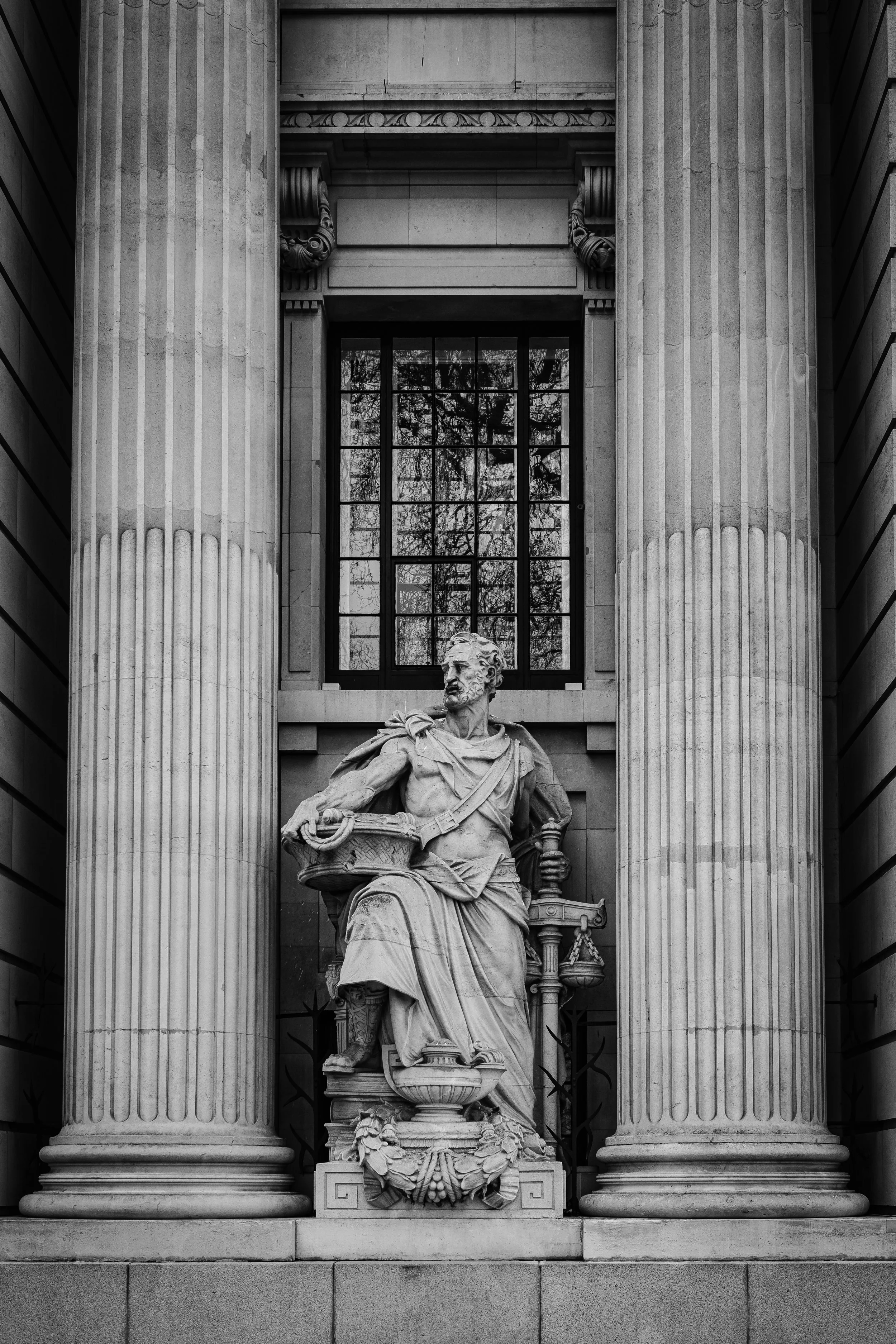
On one street you’ll find buildings and monuments designed to project permanence. Stone columns, statues, grand entrances and enough architectural confidence to suggest they expected to be admired for several centuries.
A few minutes later you’ll find yourself looking at the same city through glass, steel, railings and construction projects. The old landmarks are still there, but they’re often squeezed between newer ideas of progress.
These two photographs were taken on different walks, but they felt connected when I looked at them afterwards.
The first shows a statue sitting beneath towering columns. Everything about the scene feels deliberate. The architecture wasn’t built to blend in. It was designed to communicate strength, order and authority. Even now, long after the people who commissioned it have disappeared, the building continues delivering the same message.
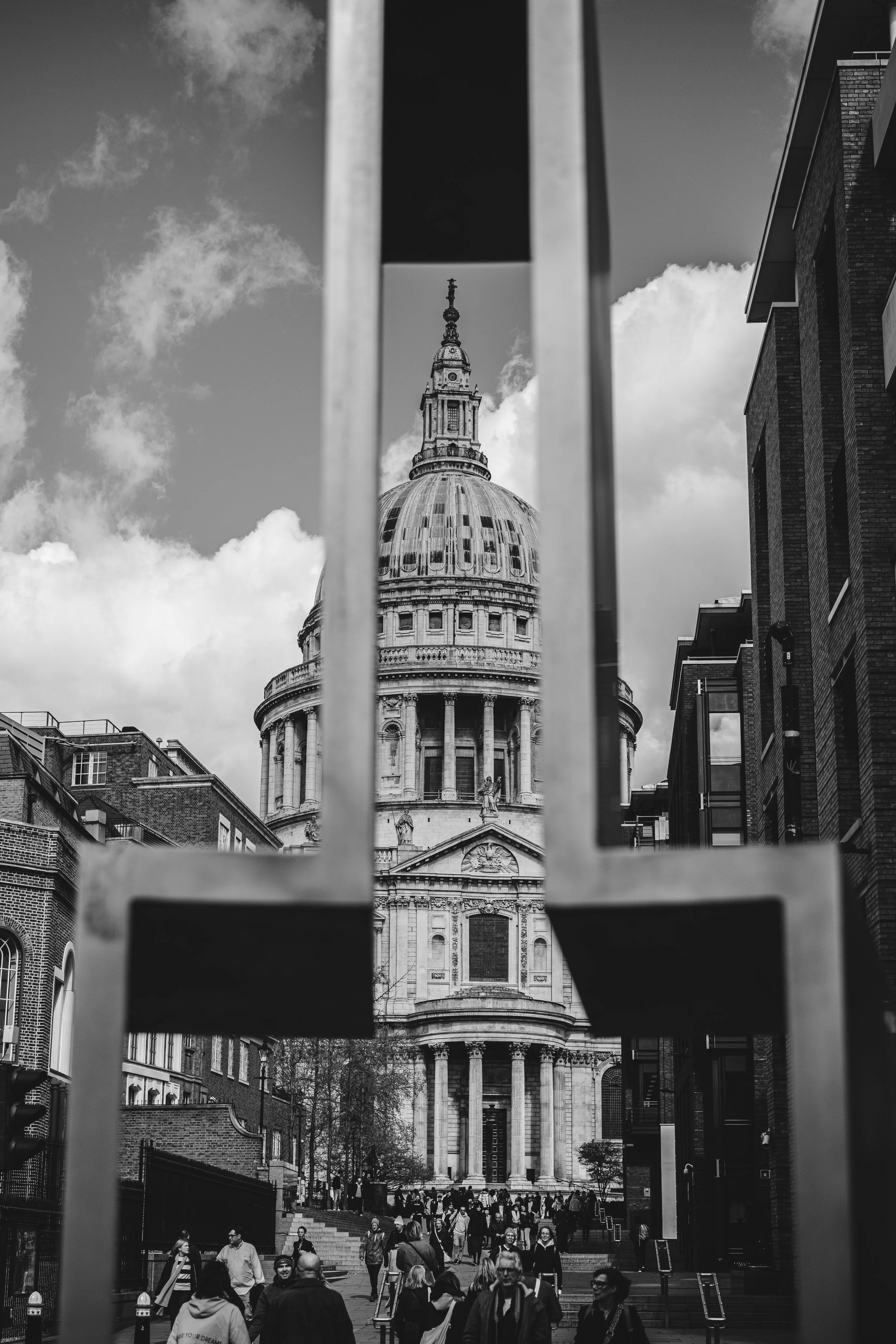
The second photograph centres on St Paul’s Cathedral, although not in the obvious way. Rather than photographing the cathedral itself, I found myself looking at it through a modern structure in the foreground. The building is instantly recognisable, yet partially obscured.
It struck me that this is probably how most of us experience London. Very rarely do we encounter its history in isolation.
Instead, we see fragments of it between office blocks, through reflections, behind cranes and across busy streets. The past is still present, but it’s constantly being reframed by whatever came next.
As photographers we’re often encouraged to find the cleanest view possible. Remove distractions. Simplify the frame.
Sometimes, though, the distractions are the photograph.
The metal structure in front of St Paul’s isn’t getting in the way of the image. It’s explaining something about the city itself.
London never really stands still. It keeps building around its history, squeezing old and new into the same space and somehow making it work.
Most days, nobody seems particularly bothered by the contradiction.
Perhaps that’s the most London thing of all.