The Weather Improves and Everybody Comes Outside
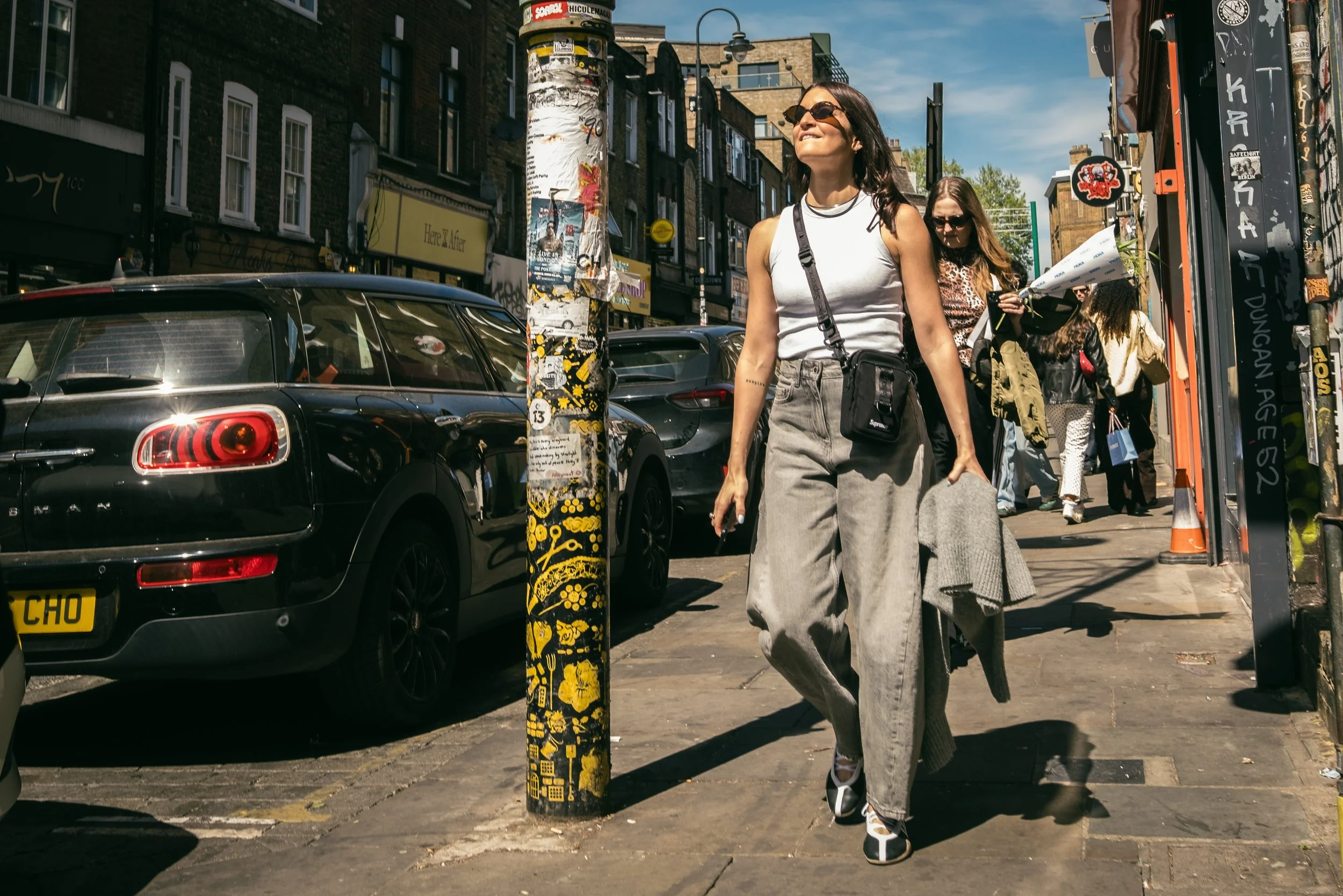
You can learn quite a lot about a city during the first genuinely warm weekend of the year.
Not because people change. Because they stop hiding.
London spends most of the year wrapped up, heads down, moving with purpose. Then the temperature creeps above twenty degrees and suddenly everyone remembers they own shoulders, sunglasses and opinions.
Brick Lane is particularly good for watching this happen.
Nobody arrives there by accident. Even the people who claim they were “just passing through” look suspiciously prepared to be seen. It’s one of the few places in London where tourists, locals, artists, office workers, influencers, dog walkers and people who simply wanted a decent coffee all somehow end up sharing the same pavement.
And once the sun appears, the whole place becomes a public living room.
Looking back through these photographs, I realised why they reminded me slightly of Martin Parr. Not because I’m shooting like Parr. Nobody really shoots like Parr without accidentally becoming a tribute act. It’s more the subject matter.
He spent decades proving that ordinary life is far stranger and more revealing than photographers often want to admit. One of his best observations was that “the ordinary is much more interesting than people make out.”
That idea sits underneath a lot of street photography whether people realise it or not.
The temptation when starting out is to hunt for dramatic moments. Somebody shouting. Somebody crying. Somebody dressed like they escaped from another dimension. You spend hours looking for something extraordinary and walk straight past twenty photographs because they seem too normal.
Then eventually you realise normality is the subject.
The woman walking through the sunshine in the first frame isn’t doing anything remarkable. She’s just enjoying a warm day. But that’s exactly why the photograph works. There’s a recognisable feeling in it. The slight smile people get when the weather unexpectedly delivers on its promises.
British happiness is often quite restrained. Nobody announces that life is wonderful.
They just sit outside for six consecutive hours and call it “not bad.”
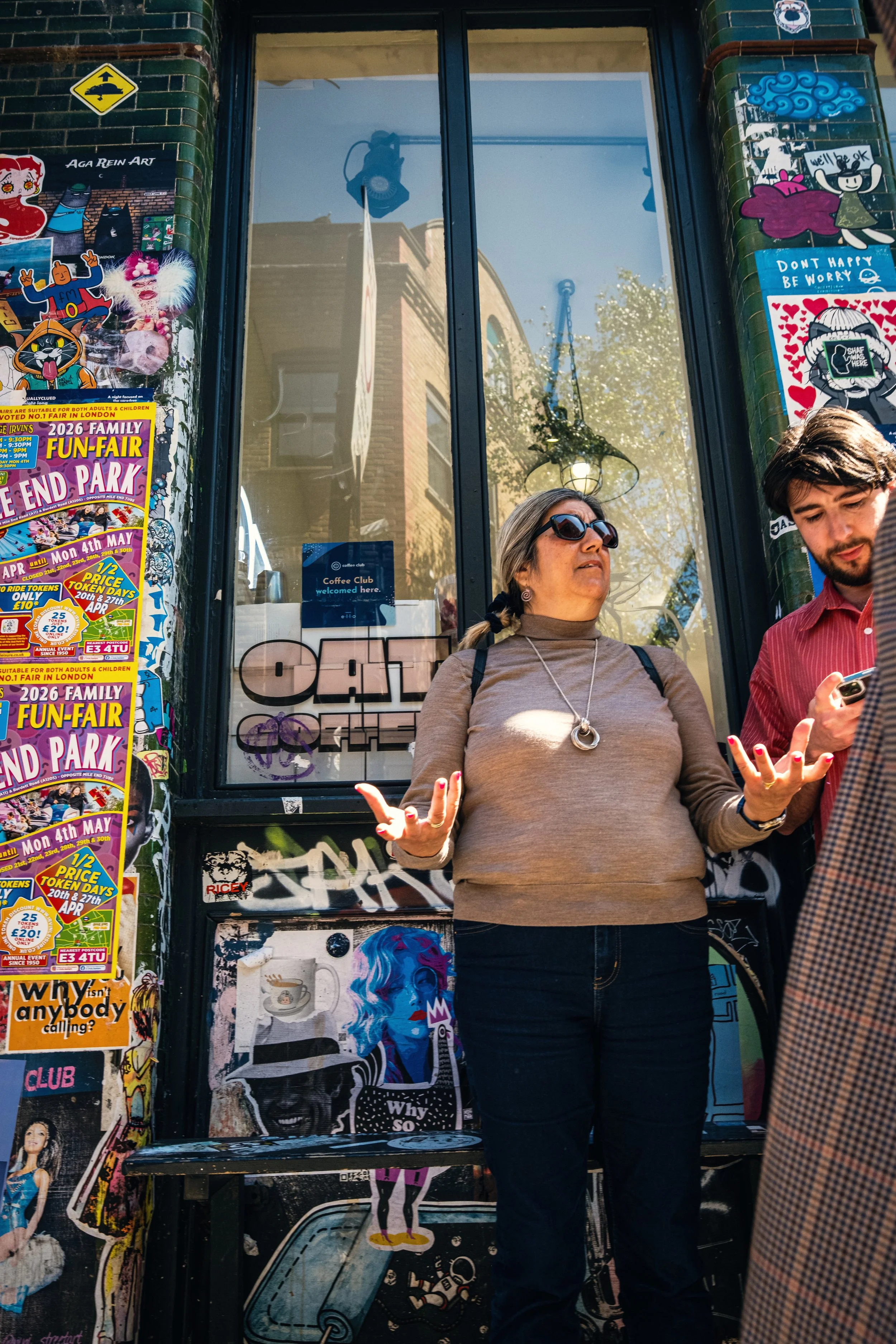
Further down the street, somebody is explaining something outside a coffee shop with enough hand gestures to suggest it’s become important. The other person is looking at a phone while trying to keep up. It might be directions. It might be an argument. It might be somebody checking whether the place they’re meant to be is actually worth going to.
The reality hardly matters.
Street photography often works because viewers start writing their own version of events.
Parr understood that better than most. His photographs weren’t really about beaches, shopping centres, tourism or food. They were about behaviour. About the small ways people reveal themselves without meaning to. He once said, “Having a camera around your neck gives you a good excuse to be nosy.”
Which is probably one of the most honest descriptions of street photography ever given.
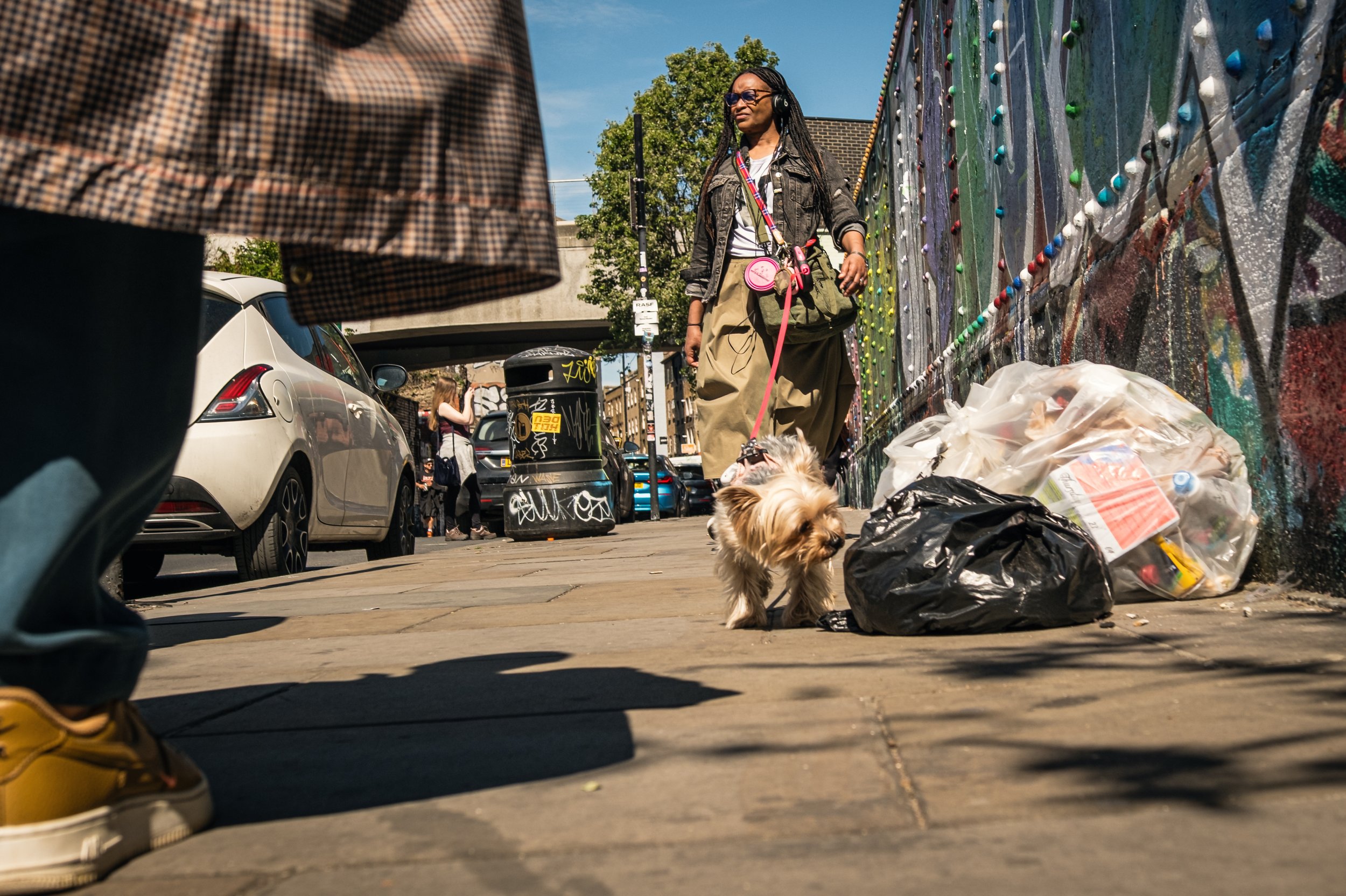
The dog in the third image interested me for exactly that reason.
Everyone else is busy being a person. Managing conversations, clothes, plans, phones, social expectations. The dog has discovered a bag of rubbish and committed fully to the experience.
No self-consciousness. No personal brand. No concern about how it appears to strangers. Just complete dedication to whatever smell is happening in that moment.
Sometimes it feels like animals accidentally expose how complicated humans make everything. What ties all three photographs together isn’t really Brick Lane.
It’s attention. Everyone is paying attention to something different.
The weather. A conversation. A smell. A passing thought. The version of themselves they become during summer.
That’s something warm weather changes as well. People become more visible. Not physically. Psychologically. The city softens.
People linger longer at crossings. Conversations stretch out. Faces become easier to read. Even the buildings seem less defensive when sunlight hits them properly.
Street photography lives off those tiny shifts.
Most people think it’s about reactions and fast reflexes, but a lot of it is simply noticing when the atmosphere changes. When people stop rushing and start existing in front of you.
Martin Parr built an entire career around recognising that everyday life already contains enough humour, awkwardness, vanity, warmth and contradiction without a photographer needing to invent any of it. His work was often criticised for being cynical, but I’ve never really thought that was the point. The humour only works because there’s affection underneath it.
That’s what I was thinking about while walking through Brick Lane.
Not trying to find extraordinary people. Just waiting for ordinary people to become interesting.
Which they usually do, if you give them enough sunlight.